Digital Marketing Essentials: Plan, Create and Measure
Welcome to Digital Marketing Essentials. Digital marketing connects a customer need with a useful product or service through online channels. In this course, you will help a fictional business, Bloom Cafe, plan a campaign for weekday lunch pre-orders. You will explore how customers discover a business, compare choices, take action and return. Each lesson includes an example and a short activity. By the end, you will have a simple campaign plan that connects an audience, message, channel, next step and measurement approach.
Your learning journey
Learning outcomes
- Explain how digital marketing supports a customer journey.
- Describe an audience and write a measurable campaign goal.
- Match content and channels to a customer need.
- Draft a landing-page message, social post and permission-based email.
- Calculate basic campaign metrics and recommend a next step.
- Create and review a simple two-week campaign plan.
Lesson 1 - Introduction: how digital marketing works
Connect a customer need with a useful next step
Digital marketing uses online channels to help people discover, understand and choose an offer. A useful campaign begins with a customer problem. A channel is the place you communicate, such as a website, search engine, social platform or email. Content is the message you share. A conversion is a defined action that matters to your goal, such as a confirmed order or a completed enquiry. A click can be useful, but it is not automatically a sale.Meet Bloom Cafe, a fictional cafe near several offices. Its team wants to increase weekday lunch pre-orders. A nearby employee needs to know what is available, how much it costs and whether collection will fit into a short lunch break. The campaign should answer those questions and make ordering straightforward.
- Explain how digital marketing supports a customer journey.
- Describe an audience and write a measurable campaign goal.
- Match content and channels to a customer need.
- Draft a landing-page message, social post and permission-based email.
- Calculate basic campaign metrics and recommend a next step.
- Create and review a simple two-week campaign plan.
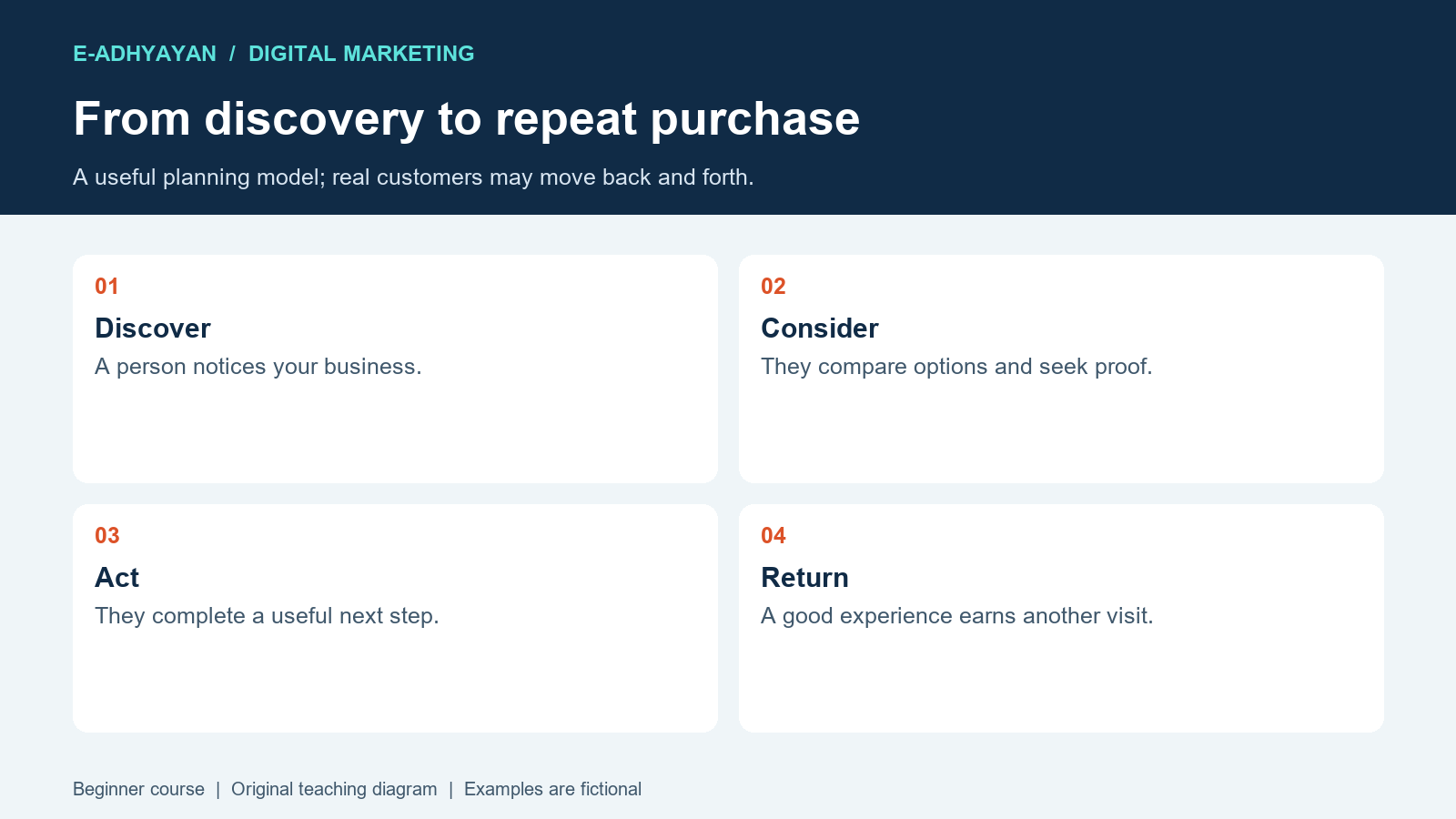
A channel is useful when it helps the right person take a meaningful next step.
Lesson 2 — Audience, value and goals
Start with the person, then choose the channel
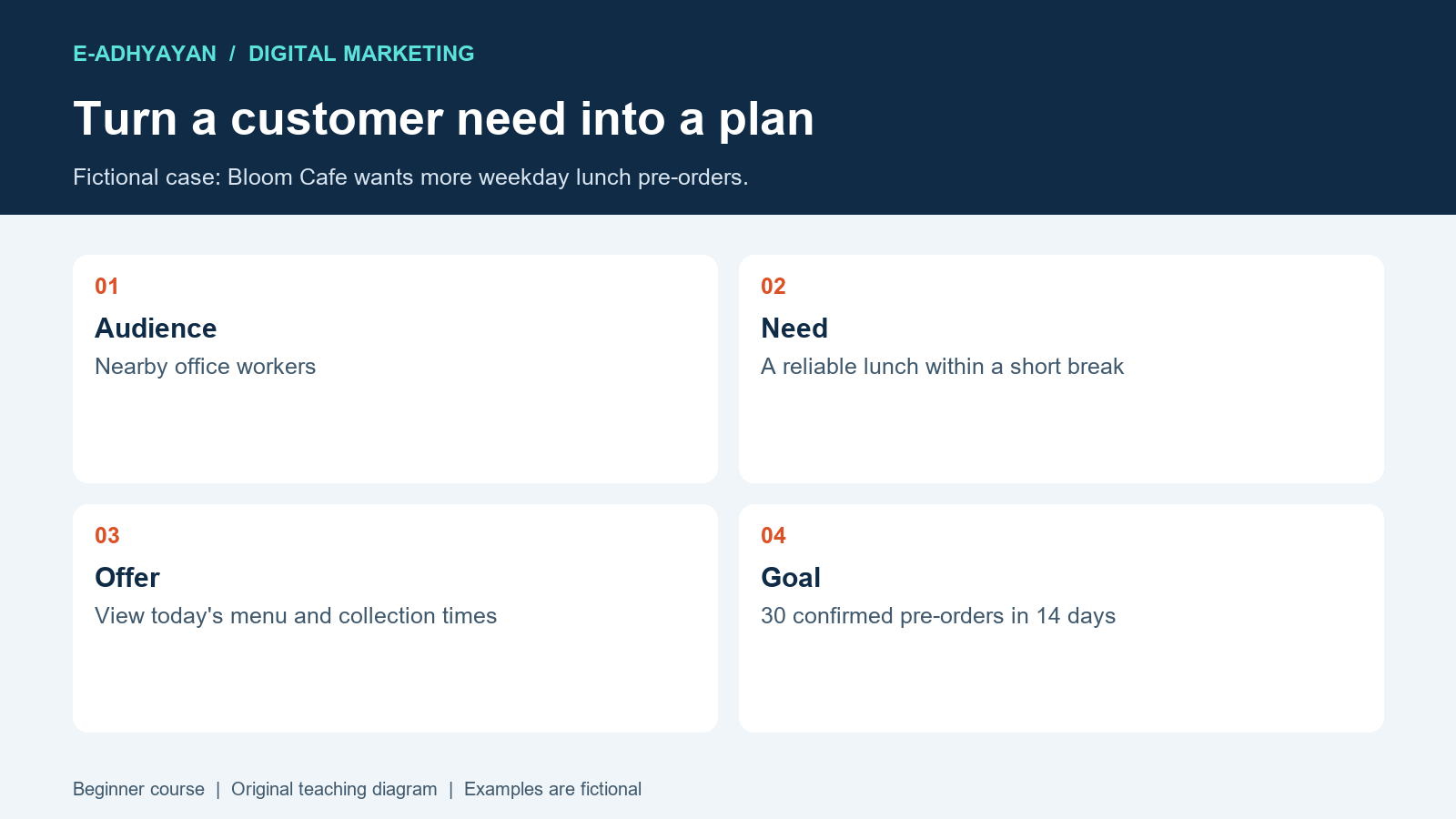
An audience description should explain a relevant situation, need and obstacle. “Everyone in the city” is too broad to guide a message. “Office workers within walking distance who have a short lunch break” is more useful for this cafe. This is an assumption to investigate, not a fact about every office worker. Ask potential customers how they currently choose lunch, what frustrates them and what information they need before ordering. Use voluntary responses and avoid collecting details you do not need. A value proposition explains who the offer helps, what benefit it provides and why someone should consider it. For Bloom Cafe: “For nearby office workers with short lunch breaks, our weekday pre-order menu makes it easier to choose lunch and plan collection.” Only claim speed, price or availability that the cafe can actually deliver.
Listen
Ask five willing potential customers how they choose weekday lunch. Record common needs without storing unnecessary personal details.
Choose one segment
Focus the first test on nearby office workers who can collect their orders.
Define the benefit
Explain menu choices and collection times clearly. Confirm that operations can support the offer.
Set a goal
Aim for 30 confirmed pre-orders from this campaign in 14 days. Record the starting level so the team can compare results. This is a practice target, not a forecast.
Select evidence
Count confirmed campaign orders, not just form openings. Use a consistent campaign code or a tested tracking method.
Write a three-sentence brief for Bloom Cafe or a business you know. Sentence one describes the audience and its need. Sentence two explains the offer and benefit. Sentence three sets one measurable goal with a deadline. Keep the brief in a notebook; this course does not require a live campaign.
Lesson 3 — Websites and search essentials
Make the destination worth visiting
A landing page is the page people reach after following a campaign link. It should continue the promise made in the message. If a post promotes weekday lunch pre-orders, sending people to a general homepage can add unnecessary work. A focused page can show today's options, prices, collection details and one clear order button. Test the page on a phone: can a new visitor understand the offer and complete the next step without help?
Landing-page checklist
- A headline that explains the offer
- Menu details, prices and availability that are accurate
- Clear collection location and timing
- A relevant image with useful alternative text
- One primary call to action, such as “View menu and pre-order”
- A working form with helpful error messages and a confirmation
- Contact information and clear information about data use
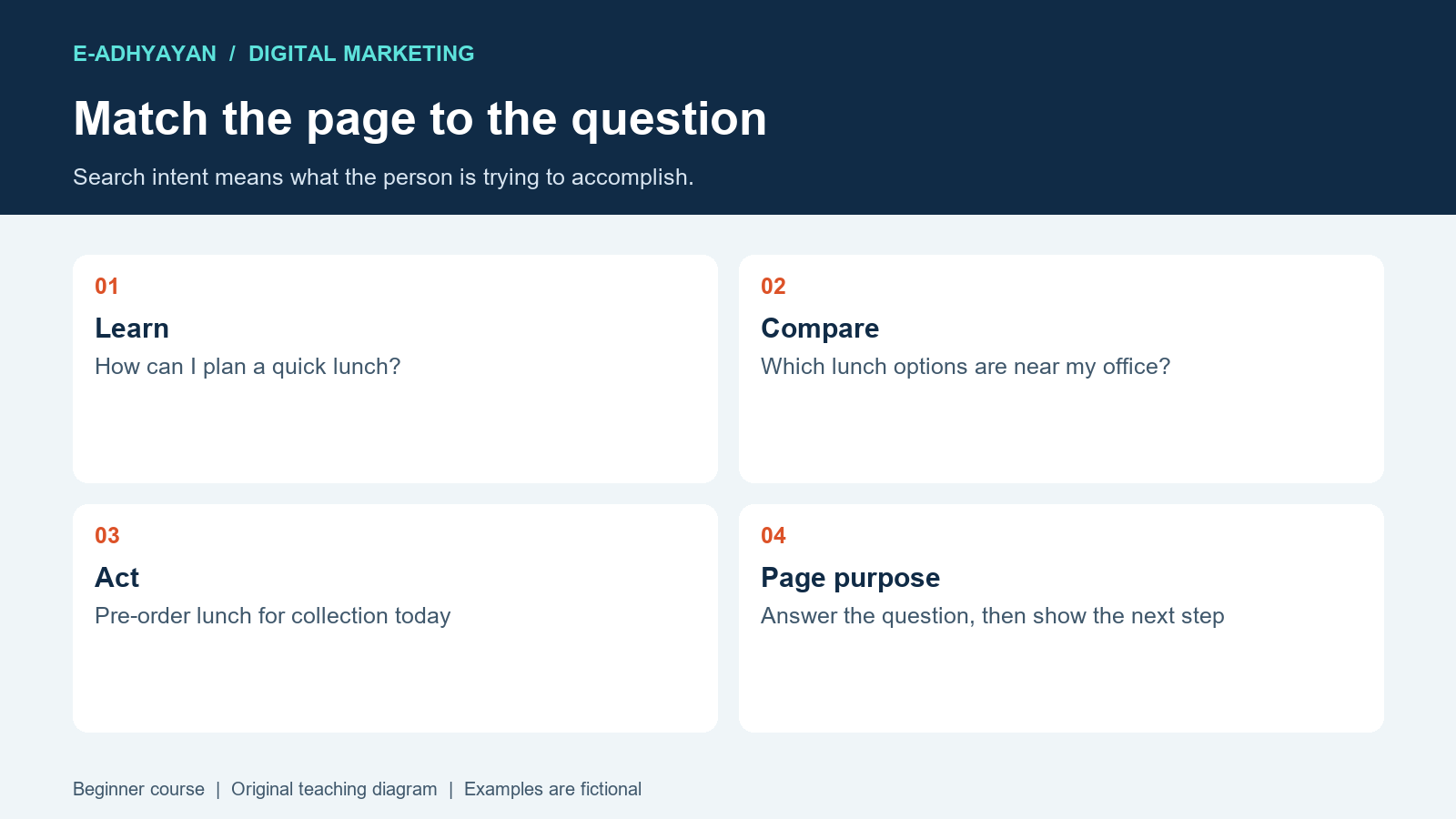
SEO means search engine optimization. It helps search engines understand a site's content and helps people find relevant pages. Use descriptive titles and headings, helpful original content and links that make the site easy to navigate. Describe meaningful images with alternative text. Changes can take time to affect search results, and no technique guarantees first place. Source: Google's SEO Starter Guide, linked in the source notes.
Google Search Explained — Search for Beginners, Episode 4 Publisher: Google Search Central
A useful page answers the visitor's next question.
Lesson 4 — Content, social media and email
Help first, then invite action
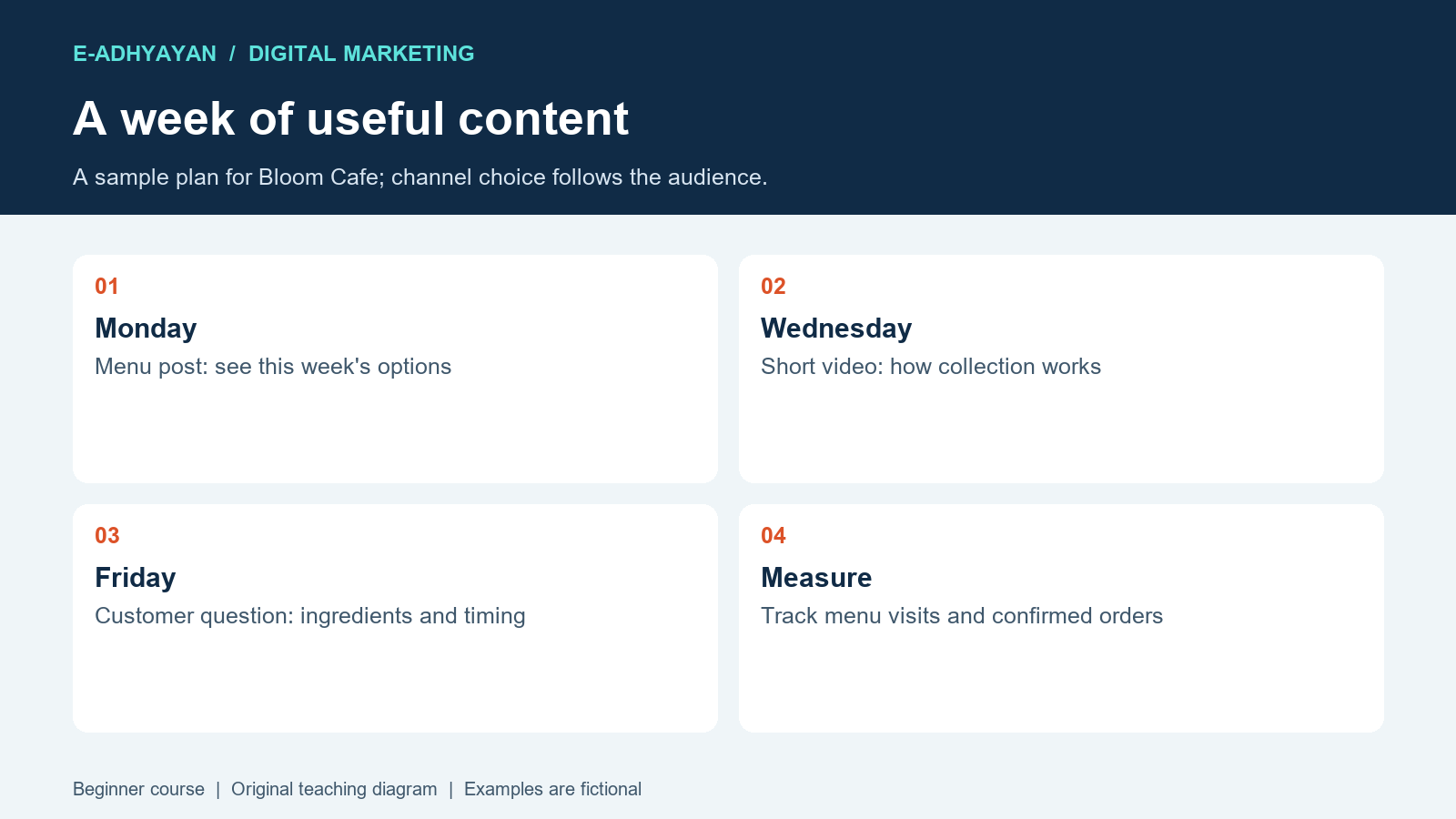
Useful content answers questions, demonstrates an offer or helps someone make a decision. The format should suit the message. A menu image can make options easy to scan; a short video can explain collection; an email can update people who asked to hear from you. Choose a manageable set of channels based on where your intended audience pays attention. Posting everywhere can spread a small team's effort too thin.
Responsible content habits
- Use images and music you created or are permitted to use.
- Describe the offer accurately; avoid invented reviews and results.
- Request permission before using a customer's photo or story.
- Send marketing emails to people who agreed to receive them.
- Honour unsubscribe requests and keep sign-up expectations clear.
- Check spelling, captions, alternative text and destination links.
Content essentials
Draft one social post and one email for the same offer. Keep the benefit and destination consistent, but adapt the wording to the format. Ask a partner: What is the offer? Who is it for? What should I do next? Revise any part they find unclear.
Lesson 5 — Paid campaigns and landing pages
Connect the ad, the offer and the destination
Paid advertising purchases opportunities to reach people. Search ads can connect with expressed intent; social ads can introduce an offer while people browse. A paid campaign still needs a relevant message, a working destination and a meaningful goal. Buying more clicks cannot repair an unclear offer or a broken order form. Start with a small learning plan and a defined spending limit. In this course, keep all activity on paper; no live ad account or payment is required.
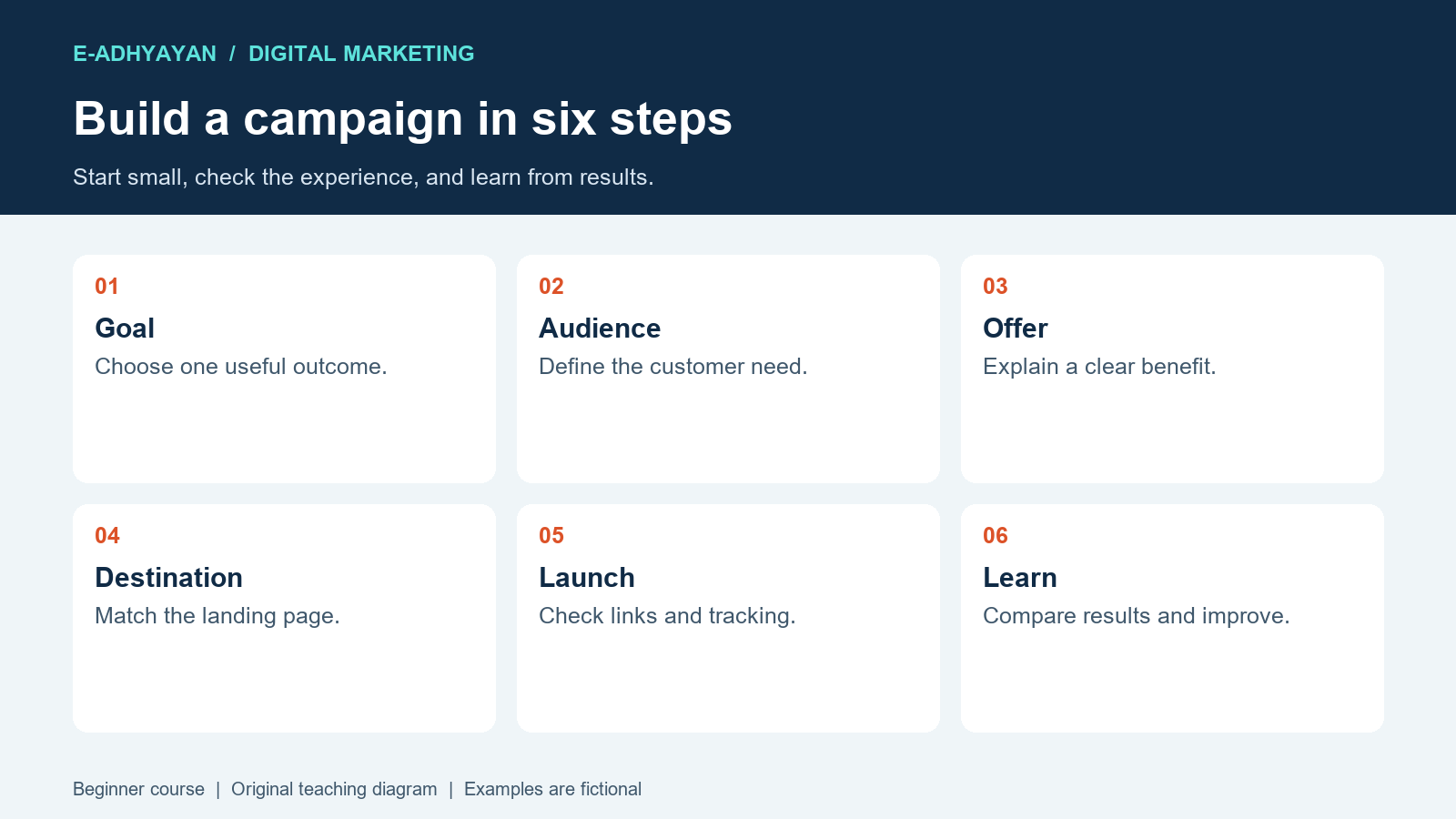
Plan Bloom Cafe's two-week campaign
Define success
Use 30 confirmed pre-orders in 14 days as the fictional target. Record how an order will be counted.
Choose the audience
Focus on nearby office workers who can collect lunch. Validate the assumptions through customer conversations.
Write the offer
“Plan your weekday lunch. View today's menu and available collection times.” Avoid unverified claims such as “the fastest lunch in town.”
Prepare the destination
Link to the menu and pre-order page. Check the form, prices, collection information and order confirmation.
Set limits and test
Use Rs 6,000 as a fictional total budget for the exercise. Document the schedule and review checkpoints. Test links and measurement before launch.
Review and decide
Compare outcomes with the goal. Identify one likely obstacle and one change to test next. Do not change everything at once.
An ad click starts a visit. A useful experience earns the next step.
Compare two headlines while keeping the offer and destination the same: A, “Explore today's lunch menu”; B, “Plan your lunch collection.” Decide in advance which outcome you will compare. Avoid declaring a winner from a few clicks; small samples and changing conditions can create misleading differences. Record what the test can and cannot tell you.
Lesson 6 — Measurement and your final plan
Turn numbers into a useful decision
Metrics answer different questions. Impressions count displays; clicks count interactions with a link or ad; conversions count the actions you defined. Keep the time period, source and counting method consistent. Ad clicks and website sessions may differ, so do not swap denominators without explanation. For the exercise below, conversion rate means confirmed orders divided by ad clicks. In a real report, name the exact definition you use.
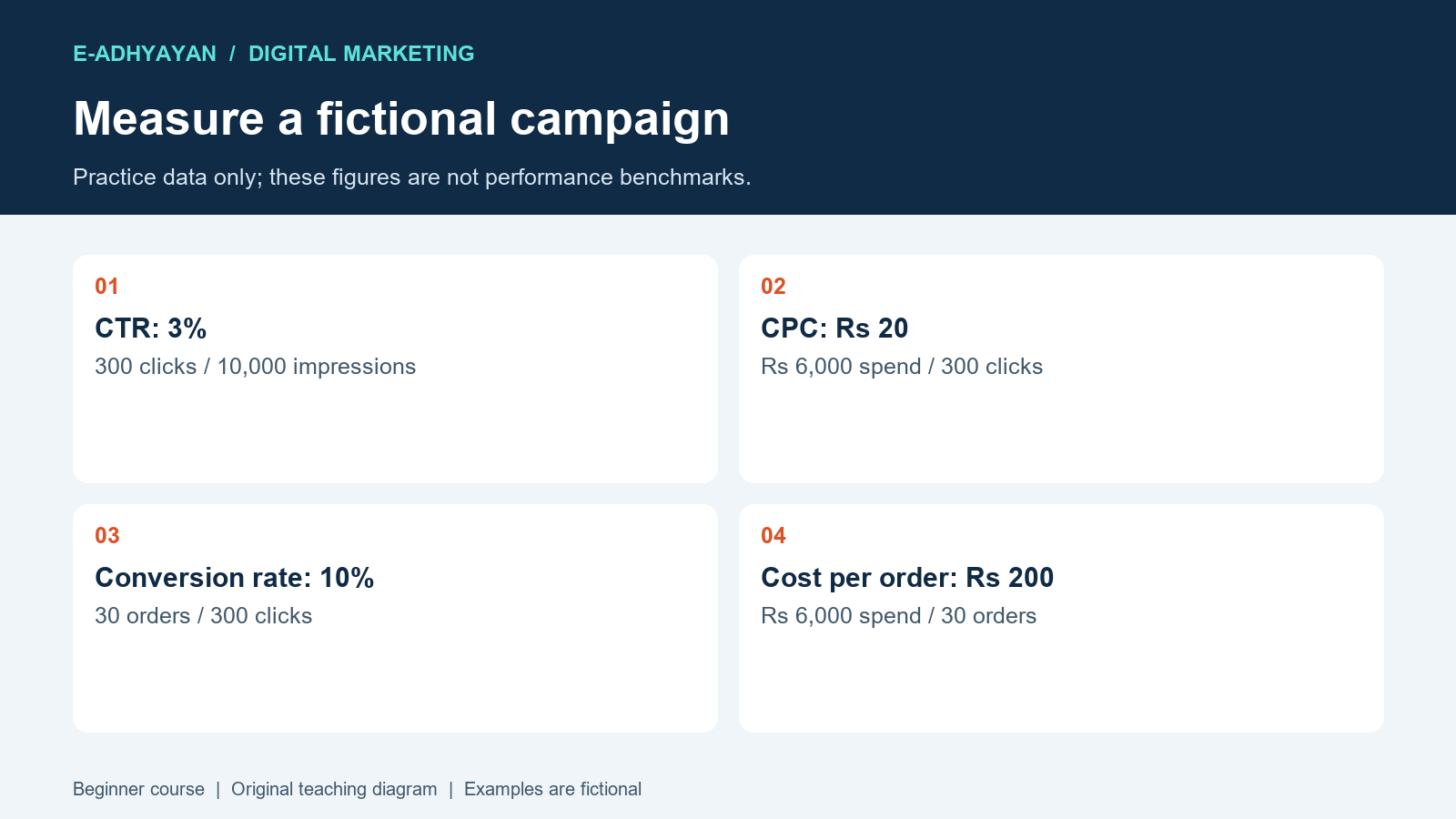
Four campaign calculations
Get started using Google Analytics with Skillshop's Analytics Academy course. Publisher: Google Analytics
Final project
Create a one-page campaign plan for Bloom Cafe or another fictional business. Include an audience and its need, a truthful benefit, one measurable goal, two selected channels, a sample social post, an email for subscribers, a destination and CTA, a two-week schedule, and three metrics with clear definitions. Add one test you would run and what result would make you reconsider your plan. Use the worksheet included in this pack.
Self-review checklist
- My audience is specific enough to guide the message.
- My offer is accurate and solves a relevant need.
- My goal has a measure and deadline.
- My content and landing page describe the same offer.
- My email is intended for people who requested it.
- My links and next steps can be tested.
- My metrics have clear definitions and a time period.
- My next experiment changes one main variable.
Start with a customer need. Make the next step clear. Learn from the result.
You have completed Digital Marketing Essentials. You can now explain a customer journey, write an audience brief, connect content with channels and interpret basic campaign metrics. Your next step is to review your one-page plan with someone who understands the business and improve it using their feedback.